Finding the right gear…
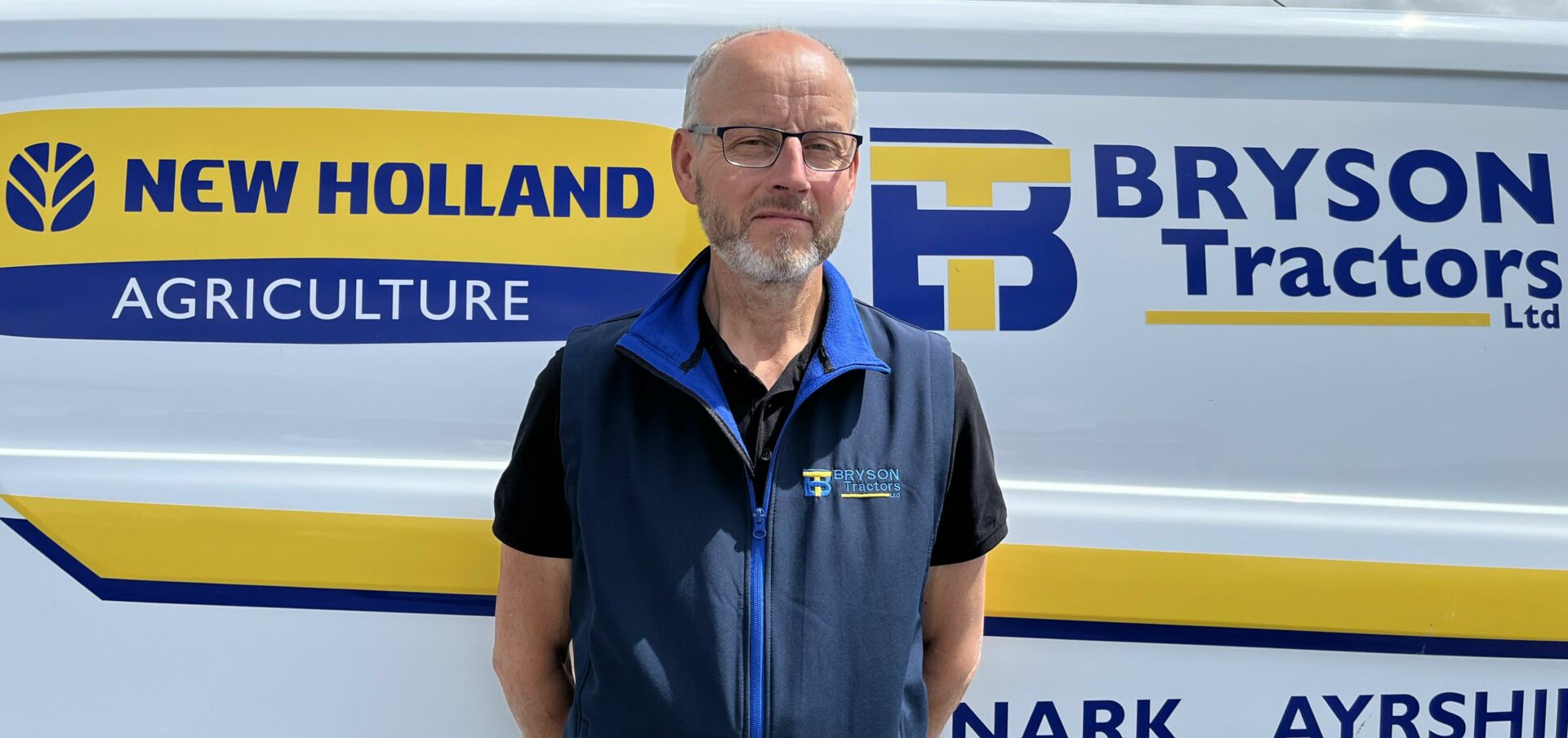
Jake Bryson grew up the eldest son on a dairy farm in Lanarkshire - in an industry where your destiny can feel written before you've even left school.
When a long-standing member of the family team moved on, there was an expectation that Jake would fill the role. And so he did, leaving school to go back home and work, against his better instincts. "I was never a cow person," he says simply. "Milking cows was just never my thing."
When his younger brother finished school and could take his place, Jake seized his chance heading off to study engineering and follow his own ambitions.
A stint working on an arable farm driving machinery only confirmed what he already knew - he didn't want to go back to the farm. Instead, he went to work for an uncle who ran a contracting business, and by his early twenties Jake was self-employed, with little more than a tractor and the determination to succeed.
Building something - at any cost
Jake’s business grew. What started with one man and one tractor expanded, through the late 1980s and into the 1990s, into a contracting operation, covering a wide area and doing work that few others were doing at the time. A local contractor giving up silage work had created an opening, and Jake took it with both hands running two full slurry outfits and two self-propelled forager and silage outfits.
The hours were extraordinary. Looking back through old paperwork, he found records of weeks where he had worked over a hundred hours. He was committed, precise, and almost incapable of letting a job go unfinished. If a customer needed him there at 2pm in the afternoon, he would move heaven and earth to be there.
What he didn’t fully understand at the time was how much of that pressure was self-created. “I created a lot of unnecessary pressure on myself,” he says. “Because of my nature, I tried to be as particular as I could. When, in reality, if I had to say to customers something hadn’t gone to plan, or I was going to be late - I felt personally responsible even if it was out with my control.
Jake also had type 1 diabetes, diagnosed at 18, which he was managing poorly through those years - too busy and too driven to give it the attention it needed. He didn’t realise, until much later, how much that was quietly dragging him down too.
The afternoon it all came apart
For a couple of years before things came to a head, Jake hadn’t been sleeping. He’d been to the doctor a few times who had prescribed sleeping tablets that he rarely took because they left him foggy the next day and he needed to function. He decided he was better off on three hours’ sleep and a lot of coffee.
When he described his work life, the doctor told him to cut back on his hours, but no one looked further than that. “They never did,” he says. “Depression wasn’t really something people talked about then.”
Then one afternoon, Jake was driving south on the motorway to meet a client when he suddenly realised he was 35 minutes further down the road than he should have been. His mind had simply switched off and he hadn’t noticed.
He made the meeting, drove home and then he went to his mother.
“Everything alright?” she asked. And Jake burst into tears. He was 30 years old, and everything had caught up with him at once.
Finding the right help
His mother, who worked in healthcare, knew who to call. After an initial referral to a psychiatrist - not the right fit, as it turned out; he needed a psychologist, someone to help him work through the causes of the unnecessary pressures he had placed upon himself, not simply manage symptoms.
He remembers coming home from that first session and sleeping for a whole day. Something had shifted.
Over the course of around 15 appointments, the psychologist helped him trace a thread back through his life that he hadn’t known was there. What emerged, surprised him. He had been bullied at primary school - but had never recognised it as bullying. He had always been near the bottom of the class and had caused disruption. It was only in those sessions that he connected it - the rebelliousness, the difficulty in relationships, the drive that tipped over into self-destruction - so much of it had roots back to those early years.
“I had absolutely no idea,” he says. “I didn’t even realise it when I was at school.”
The doctor also gave him practical advice to get away. So, over Christmas and New Year, he flew to New Zealand with a friend. He was gone for a month. “It just took me away from everything,” he says. “I came back a different person.”
Getting back, and building differently
Jake returned in the January and eased himself quietly back to work. His employees had kept everything going while he was off - something he is still grateful for. That same year, he met Nancy, who would become his wife and together they built the business and raised a family.
The business continued to grow, eventually expanding from contracting into machinery sales, with Nancy managing the day-to-day operation of Bryson Tractors, based in Lanark. It took more than ten years of conversation before Jake was ready to let the contracting side go - but when he did, it was, he says, the hardest decision but best outcome for the future.
He is now in his early sixties; Jake works most days but no longer carries the full weight of running a business alone. “I don’t need to be stressed about things,” he says. “It’s taken me a long time to get to that point.”
What saved him, and what he’d tell others
The thing the psychologist had told him all those years ago was simple - you need to find something that takes you completely away from work. He tried golf but four and a half hours on a course didn’t work for him.
What worked, eventually, was walking. And cycling. He got back on a bike when his children were young, started accompanying them to a cycling club, and was eventually talked into going out on the bike on a Sunday. He discovered he enjoyed it - not for the fitness, but for the silence it gave his head.
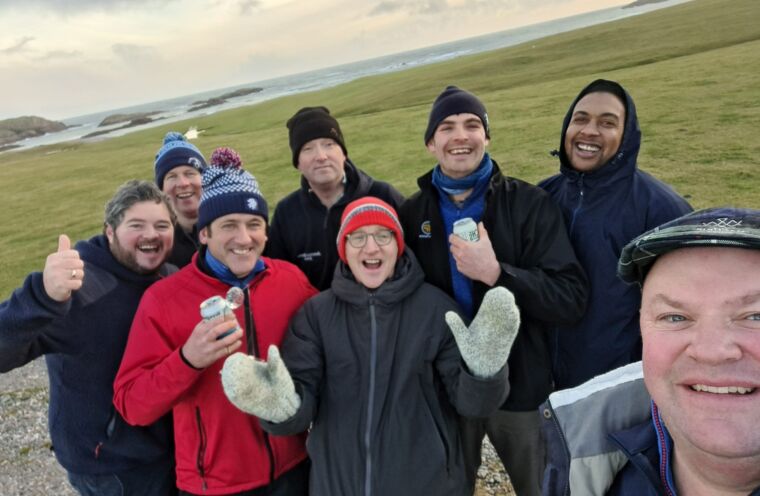
Then his son, Angus, bought him a rucksack for his birthday and told him they were walking the West Highland Way. He’d barely walked the dog more than a couple of miles before, so he was sceptical! But they did it. And the following year, he did it again - this time with three friends from his college days, 37 years after they had graduated. Now it’s a fixture every year, a long-distance walk with those same friends. Lady Anne’s Way, the Great Glen Way, Kintyre Way and more.
“It clears my head,” he says. “It’s unbelievable. Nobody ever told me that when I was younger - that I could think about things other than work, and it was as simple as taking a walk or going for a cycle to clear my mind.”
His advice to other contractors and farmers who are struggling is to talk to someone. Don’t wait. And if you can, take yourself away from things. Even an hour a couple of times a week can change your thoughts. But the bigger thing, he says, is understanding what’s going on in your own mind and knowing what helps you. Because often, the work itself isn’t really the problem.
“I look back and I know there are too many people in the farming community I’ve lost over the years to mental health problems. And I think - how can that still be happening? But in the back of my mind, I know exactly why. They didn’t or couldn’t get the help when they needed it. It’s just a moment in time.”
He sees it in the farmers who come into the dealership, too. The ones who talk about machinery break downs or selling at low prices making things hard. Underneath it, sometimes, is something else entirely. He tries to notice. He makes them a coffee and he listens.
“It’s not always just about the farm,” he says. “But it’s that wee thing at the end of the day that can tip the balance and if you aren’t looking after your day-to-day wellbeing, it can spiral.”
Jake’s not a man who finds it easy to talk about this. He says so himself. He’s never told this story before, but he believes it matters - especially in an industry where people are often alone, often proud, and often the last to ask for help.
Farmstrong Scotland’s interactive ‘How’s it Going?’ tool can help you understand more about how you are feeling, and gives feedback and tips on things you can do to improve your wellbeing. Visit it at www.farmstrongscotland.org.uk/hows-it-going
If you’re struggling, please reach out to your GP, or contact a mental health support service such as The Samaritans on 116 123, NHS24 on 111, RSABI on 0808 1234 555, or Breathing Space on 0800 83 85 87. You don’t have to be at crisis point to ask for help.